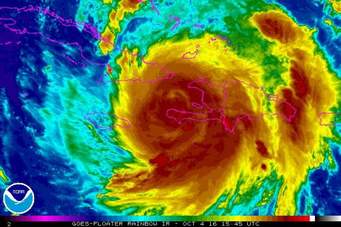
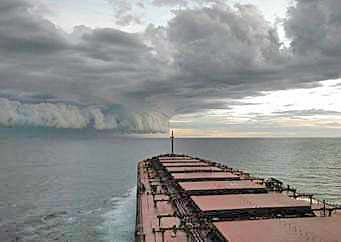
HEADS UP:
You would pay attention to a 'TV Doppler' Weather Alert about an approaching STORM ; like HURRICANE IKE - OR - especially if you were on the BOW OF A CARGO SHIP STEAMROLLING TOWARDS A MASSIVE HURRICANE-LIKE BELOW-RIGHT?
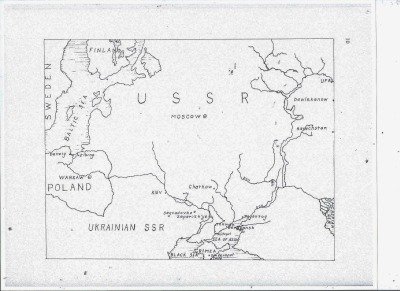
The Wall Family Histoy Started in the 'Katherine-the-Great' Era of Russia Near the Sea of Azov-'The Ukraine'-and Landed in Hillsboro, Kansas
The Story for the Wall Family began in the Netherland A.K.'s parents were Abraham Wall and Anna Krueger both born in and around Ohrloff, Russia. Some of the names such as Ebenfeld, Annenfeld, Gradenheim, Marienthal [Marion?] and Aulne, can still be found in/around Hillsboro, Kansas-even Today! Hillsboro was the boyhood home of my father HERMAN C. WALL after whom I am named, plus a "Jr." suffix.
Unser GroessVatti, Abraham Krueger Wall born 08 January, 1860 in Annenfeld, Crimea, Russia and Our GroessMutti, Clara Hermina Ernestine Glied geboren 05 September, 1872 in Bresslau,Schleswig-Holstein, Germany
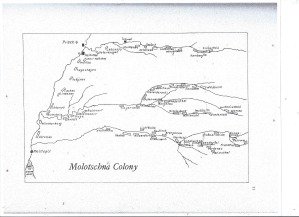
Credit for Maps goes to Karen Penner [Suderman] and Peggy Goertzen of Hillsboro and Newton, Kansas...
Credit for Paragraphs Below Go to Robert [Bob] Suderman, son of Levi and Sally Suderman of Hillsboro, Kansas, 'On the Zwieback Trail' authored by Lisa Weaver and Content From Wikipedia... The Free Encyclopedia...
"The Prince of Peace is Jesus Christ [Yeshua HaMashiach]. True Christians DO NOT Know Vengeance. They are the Children of peace, and they walk in the way of peace." -Menno Simons, 1552
So Who Were the 'Mennonites,' where did they Originate and Why Did the Immigrate to the USA???
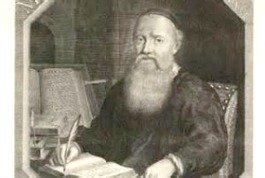
- Menno Simons was the 16th Century Anabaptist leader after whom the Mennonites were named. He spent much of his adult life preaching and teaching among the scattered Dutch Anabaptist Communities across North Germany and present-day Poland (know then as Prussia.) The people that he visited and spoke with become known as the "Mennonites."
- He began as a former Dutch RC priest in 1524 at the age of 28 in Holland.
- He became a follower of the Swiss Anabaptist way --Anabaptist essentially came to mean "against infant baptism"-- originally led by Ulrich Zwingli from 1523-1525, and then, after breaking with UZ over state allegiance, led by other individuals who were known as the Brethren or Swiss Brethren.
- In 1536 Menno turns away from tradition and becomes Bible-centered in his beliefs and practices. He leaves the priesthood and his home community with his wife and children to start an underground life teaching Anabaptist beliefs. He seeks to use the life of Yeshua as a guide to daily living...In 1539 Menno publishes ' The Foundation Book.'
- The movement spread to Holland, and as far as we know, Simons never went to Switzerland. Holland became the epicenter of the movement and it soon bore his name, to his dismay.
- When the Anabaptists fled hardship in the Netherlands, they clustered in areas where they were accepted without persecution with the largest settlements located near the city of Danzig and throughout the Vistula River Delta. The Dutch Anabaptists lived there in relative peace for almost 200 years until the area came under Prussian control.
- The Prussian kings were not as accepting of religious minorities as the previous rulers had been and life became difficult for the Anabaptists who were at this point being called Mennonites.
- That [above] is why, beginning in 1788, many of the Mennonites in Prussia accepted the invitation of Catherine-the-Great to move to Russia.
- The Alexanderwohl Church in Goessel
[Kansas] has Dutch Brethern Church records that reach back to the 1500s, but they
are incomplete and sketchy, since many/most of these folks were meeting
in secret; on the run; and being tortured and killed by the statists
who demanded unity of religious belief and political allegiance. The
refusal by the Brethren to allow the children to be baptized into the
church/state was seen as treason and taken to be a direct statement of
disavowal of the state's jurisdiction, whether it really was or not.
- There is some derivative church data back to those early times in
Holland and in Prussia as the Brethren moved there in the mid 1500s.
These records are in the State Lutheran Church which was the state
church in Prussia. The state required that the church handle the census
information, and Brethren births and deaths appeared there for quite a
time.
- Alan Peter's Grandma ancestry follows these Dutch/North
German-Prussian/South Russia Mennonites who are our ancestors -- the
ones who speak Plat Deutsch [Plautdietsch]
- To the best of my knowledge, the other
Mennonite lineage, from Switzerland and the South German areas --which
includes the Amish, Hutterites, Pennsylvania Dutch Old-Mennonites, etc,
is not in the Grandma Wall database.
- These folks do not speak the Low
German. They came directly to the USA without the sidetrip to South Russia.
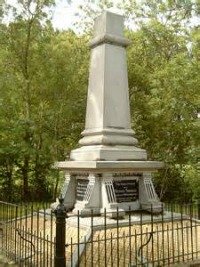 Menno Simons Memorial Located in Friesland, The Netherlands |
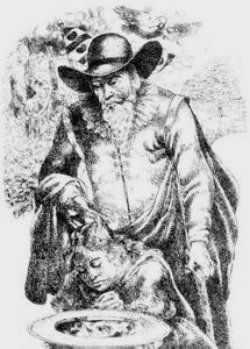 Menno Simons, Defender of 'Ana-baptism' |
From Wikipedia-the Free Encyclopedia...
- Menno Simons (1496 – 31 January 1561) was an Anabaptist religious leader from the Friesland region of the Low Countries.
- Simons was a contemporary of the Protestant Reformers and his followers became known as Mennonites.
- "Menno Simons" (/ˈmɛnoː ˈsimɔns/) is the Dutch version of his name; the Frisian version is Minne Simens (/ˈmɪnə ˈsimn̩s/), the possessive "s" creating a patronym meaning "Minne, son of Simen" (cf. English family names like Williams and Rogers).
- Early life Menno Simons was born in 1496[1] in Witmarsum, Friesland, Holy Roman Empire. Very little is known concerning his childhood and family except that he grew up in a poor peasant environment. His father's name must have been Simon, Simons being a patronym, and he had a brother named Pieter.[2]
- Simons grew up in a disillusioned war-torn country. Friesland was ravaged by war in the late 15th and early 16th centuries. Landsknecht soldiers haunted the Frisian lands in the 1490s to force the 'Free' Frisians to accept the duke of Saxony-Meissen as their head of state. The duke was the governor of the Netherlands for the Habsburg family. One of the archenemies of the Habsburgs, the Duke of Guelders, invaded Friesland in 1515 and conquered half of it. Saxony ceded the other half to the Habsburgs. The Frisians tried to regain their freedom but they were too weak and eventually accepted the imperial authority of the Habsburg emperor Charles V.[citation needed]
- Simons learned Latin and some Greek, and he was taught about the Latin Church Fathers during his training to become a priest.[2] He had never read the Bible, either before or during his training for the priesthood, out of fear that he would be adversely influenced by it. When he later reflected upon this period in his life, he called himself stupid.[3] Roman Catholic Church He was ordained as a Roman Catholic priest in 1515 or 1516[4] at Utrecht. He was then appointed chaplain
- in his father's village Pingjum (1524).
Around 1526 or 1527, questions surrounding the doctrine of transubstantiation caused Menno Simons to begin a serious and in-depth search of the Holy Scriptures,
which he confessed he had not previously studied, even being a priest.
At this time he arrived at what some have termed an "evangelical humanist" position.[citation needed]
- The house near Bad Oldesloe in which Simons is believed to have worked
Menno's first knowledge of the concept of "rebaptism", which
he said "sounded very strange to me", came in 1531. This came through
the means of hearing of the beheading of Sicke Freerks Snijder at Leeuwarden
for being "rebaptized" ["Snijder", meaning "tailor", was probably not
the family name, since Freerks is the patronym form of Freerk and Sicke
was, in fact, a tailor by trade).
- A renewed search of the scriptures
left Menno Simons believing that infant baptism is not in the Bible. He discussed the issue with his pastor, searched the Church Fathers, and read the works of Martin Luther and Heinrich Bullinger. While still pondering the issue, he was transferred to Witmarsum. Here he came into direct contact with Anabaptists, preaching and practicing "believer's baptism". Later, some of the Münsterite
disciples came there as well.
- While he regarded them as misled and fanatical, he was drawn to their zeal and their views of the Bible, the Church, and discipleship.[citation needed]
- In 1535, his brother Pieter was among a group of Anabaptists killed near Bolsward because of his participation in the violent takeover of a Catholic monastery known as the Oldeklooster (or Bloemkamp Abbey).
This monastery, near Bolsward in the Dutch province of Friesland, was
seized on 30 March 1535 by about 300 Anabaptists of Friesland, both men
and women, led by Jan van Geelen, an emissary of the Anabaptists of
Münster. They thereby won a strong position and from here tried to
conquer the entire province—an absurd idea!
- The imperial stadholder
Georg Schenk von Tautenburg was put in charge of capturing the old
monastery from the Anabaptists. He supposed that he would be able to do
so by a mere turning of the hand, but found himself compelled to conduct
a regular siege.
- On 1 April he decided to bombard the monastery with
heavy artillery and tried to storm it. Four times he had to lead his
soldiers into the fire. On the third assault they succeeded in taking
several positions. Some of the fortifications and the church remained in
Anabaptist possession. On 7 April the monastery was finally stormed
after a severe battle.
- Eight or nine hundred Anabaptists are said to
have lost their lives, but this number is a gross exaggeration; there
were 300 at the most. Of the ones who did not lose their lives in the
storming, 37 were at once beheaded and 132, both men and women, taken to
Leeuwarden, where 55 were executed there after a short trial. Jan van
Geelen escaped.[citation needed]
- After the death of his brother Pieter, Menno experienced a spiritual and mental crisis. He said he "prayed to God with sighs and tears that He would give to me, a sorrowing sinner, the gift of His grace, create within me a clean heart, and graciously through the merits of the crimson blood of Christ, He would graciously forgive my unclean walk and unprofitable life..."[5] Anabaptists Protestant Reformation Precursors Waldensians
Highlights of the Life of Menno Simons...
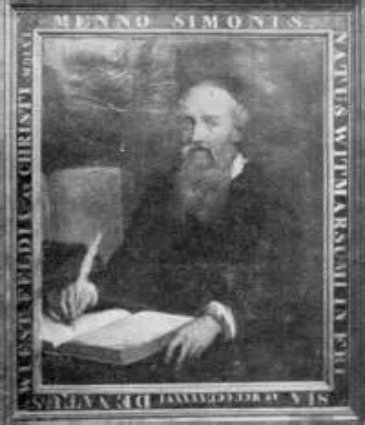
-
Menno Simons rejected the Catholic Church and the priesthood on 12 January 1536,[4] casting his lot with the Anabaptists. The exact date of his new baptism
is unknown, but he was probably baptized not long after leaving
Witmarsum in early 1536. By October 1536 his connection with Anabaptism
was well known, because it was in that month that Herman and Gerrit Jans
were arrested and charged with having lodged Simons.
- He was ordained
around 1537 by Obbe Philips. Obbe and his brother, Dirk Philips, were among the peaceful disciples of Melchior Hoffman (the more radical of Hoffman's followers having participated in the Münster Rebellion).
- It was Hoffman who introduced the first self-sustaining Anabaptist
congregation in the Netherlands, when he taught and practiced believers'
baptism in Emden in East Frisia.
- Menno Simons rejected the violence advocated by the Münster movement, believing it was not Scriptural.[6] His theology was focused on separation from this world, and baptism by repentance symbolized this.[6]
For true evangelical faith is of such a nature that it cannot lie
dormant; but manifests itself in all righteousness and works of love; it
dies unto flesh and blood; destroys all forbidden lusts and desires;
cordially seeks, serves and fears God; clothes the naked; feeds the
hungry; consoles the afflicted; shelters the miserable; aids and
consoles all the oppressed; returns good for evil; serves those that
injure it; prays for those that persecute it; teaches, admonishes and
reproves with the Word of the Lord; seeks that which is lost; binds up
that which is wounded; heals that which is diseased and saves that which
is sound. The persecution, suffering and anxiety which befalls it for
the sake of the truth of the Lord, is to it a glorious joy and
consolation.
— Menno Simons, Why I Do Not Cease Teaching and Writing,
- 1539 Menno evidently rose quickly to become a man of influence. Before 1540, David Joris, an Anabaptist of the "inspirationist" variety, had been the most influential leader in the Netherlands. By 1544, the term Mennonite or Mennist was used in a letter to refer to the Dutch Anabaptists.[citation needed]
- Twenty-five years after his renunciation of Catholicism, Menno died on 31 January 1561 at Wüstenfelde, Holstein, and was buried in his garden.[2] He was married to a woman named Gertrude, and they had at least three children, two daughters and a son.[7]
- Theology
Menno Simons (1854)
Menno Simons' influence on Anabaptism in the Low Countries was so great that Baptist historian William Estep
suggested that their history be divided into three periods: "before
Menno, under Menno, and after Menno". Menno is especially significant
because of his coming to the Anabaptist movement in the north in its
most troublesome days, and helping not only to sustain it, but also to
establish it as a viable Radical Reformation movement.[citation needed]
- Excommunication Girolimon (1995) compares the teachings of Menno Simons with those of Protestant reformer John Calvin (1509–64), focusing on the issue of excommunication. This theological analysis stresses sharp contrasts between the two leaders on four basic principles: on procedures leading to excommunication, on the severity of sanctions on the excommunicant, on the restoration of a repentant individual, and on civil punishment. Calvin and Menno, each a leader of distinct wings of the Reformation, both believed this extreme form of discipline to be essential to the function of the church in society, agreeing on the basic grounds for excommunication as expressed in the New Testament. Menno, however, envisioned the application of reprimand as a process administered by the entire church body against any sin; Calvin reserved excommunication for especially severe transgressions as identified by the Company of Pastors and the Consistory.
- Among other disagreements, Calvin approved civil punishment for certain forms of unorthodoxy while Menno advocated strict church/state separation. They differed most profoundly in their views on why church discipline was necessary. Simons saw human perfectability as attainable after conversion, while Calvin stressed an Augustinian theology of human depravity.[8][9] Bride of Christ Menno Simons drew heavily from Biblical images of the bride of Christ when envisioning a new church.
- He found in the Biblical Song of Solomon
a description of the relationship between a purified church and Christ
that not only applied to a reformed church but also to the earthly
marriage between man and woman. Like the bride in the songs, the woman
must come in total love and devotion and will be cleansed of her natural
evil by contact with her husband. He did not alter the conventional
view of relations between men and women but idealized the woman's
subordinate and asexual status.[10]
Infant baptism
- The Anabaptists insisted on adult baptism. By contrast, Martin Luther defended infant baptism; his belief in it stemmed from his view of the church as ideally an inclusive reality in a Christian society. Menno Simons based his rejection of infant baptism on the concept of the church as a disciplined group of individuals who have voluntarily committed their lives to Christ.
- He viewed sanctification as a lifelong
process that does not completely rid the presence of sin from one's
life.[11]
Peace
Although some Anabaptists in Amsterdam and Münster in the 16th
century engaged in violence and murder, Dutch Mennonites generally
became pious and peaceful. An explanation of this transformation is
needed, and the answer may lie in Menno's transformation from Catholic
priest and apologist to pacifist Anabaptist reformer—a transformation
linked to his relationships with the radical Münsterites and peaceful
Melchiorites.
- In his 1539 Christian Baptism Menno Simons stated
his reluctance to engage in disputes, which may have stemmed from his
reluctance for years to announce his true convictions.[12]
Asceticism
Menno Simons rejected asceticism in terms of its traditional practices of social withdrawal, mortification, and self-denial. Historical theologian Richard Valantasis,
however, has suggested that asceticism should not be defined as these
physical practices but as a group of activities designed to reestablish
social relations between the individual and the dominant social
environment through a new subjectivity, different social relations, and
an alternative symbolic universe.
- Simons' theology is ascetic by Valantasis's definition since it used these methods to restructure Anabaptists' relationship with 'worldly' society.[13]
"See that none of you repays evil for evil, but always seek to do good to one another and to all"...I Thessalonians 5:15
NON-VIOLENCE AND THE MENNONITES...
|
Are you/Someone You Know Trying to Consolidate Your Website Marketing Efforts? | https://mail.startmail.com/mail/INBOX/INBOX.801761 |
Mennonites have had a long history of Conscientious Objection to war, searching instead for ways to be a peaceful witness to the world. Often Mennonites have completed Alternative Service that has included many assignments, such as working in mental health hospitals, or serving with the Mennonite Central Committee-usually overseas-in teaching, medical or agricultural fields.
Have A Great Story About This Topic?
Do you have a great story about this? Share it!
When I received my 'Draft Notice' to be displayed on my 'Viet-Nam War Page I went to my Mennonite Father and asked him for his advice; I was (24) at the time September, 1968 and will always remember his advice:
"Son, I served, but don't let my service be a reason for your service; if you love your country, then you should consider serving; and since you are graduating, perhaps you can become an officer or learn a skill that will help you upon your separation; but whatever you do, Remember This: You will be headed towards a combat zone and there's an above average chance that you will be hurt or even killed; so before you go, strengthen your faith, make peace with your Mother we used to 'knock heads' at least once per day-I guess because I was so much like her side of the family and your sister; Stay Out of Trouble, Stop Your Drinking and Partying and your ultimate goal is the 'Honorable Discharge,' which if you don't earn, you will have a very difficult post military life.
I did, I did, I did and I earned my Honorable Discharge. But now +45 years later, I feel I dishonored my family, my faith, and my life code.
How About You? Have a Similar Story or Know of Somebody Who Does? Don't Be Shy-This Website is Being Built for People like You-and-Me!!!
:>))

HERE'S ...

Recent Articles


-
August <~> September 2021
Dec 07, 22 01:55 PM
So this past summer, 2021, was somewhat uneventful, it was the day in & out routine of life at Mariposa. I continued to look for more programs to add to my product mix; starting to realize that I need… -
MUSTARD SIZED FAITH: Still Here +2000 Years LATER!
Jul 18, 21 11:11 PM
 I was Fortunate to have been born in a Christian Home where faith, prayer, praise, worship,and Personal Testimony was a Focal Point of Our Family Life!
 -
BREAKING NEWS FROM VA (MID-JUNE)
Jul 12, 21 06:27 AM
* I was diagnosed with hypothyroidism in November 1997... * My thyroid was removed with radiation in December 1997... * I then began my journey of weight gain/weight loss & medications build-up until…
As John Denver Used to Sing:
"He's Coming Home to a Place Where He's Never Been Before!"